“It’s easy to forget that England is made up of many Englands”
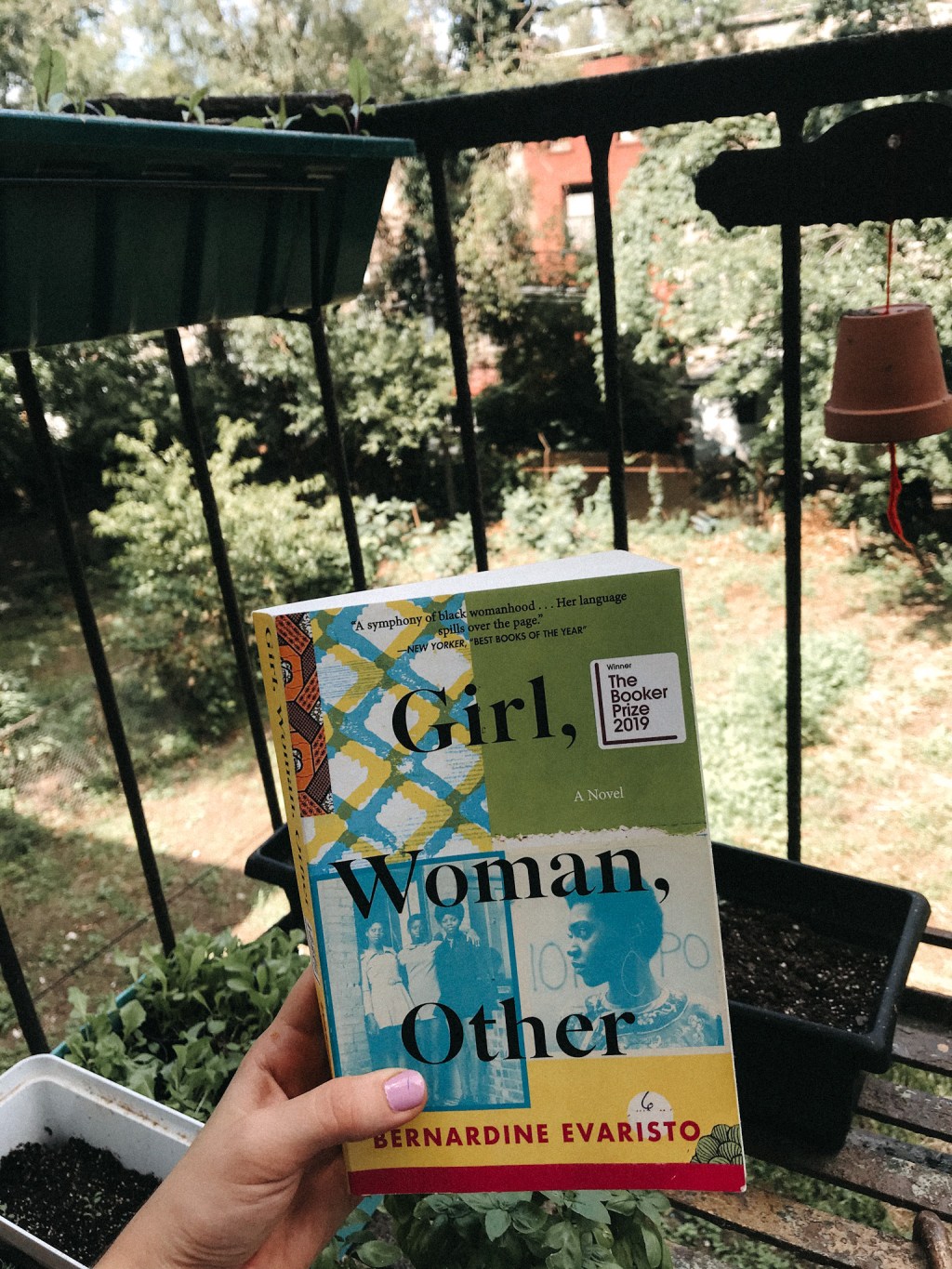
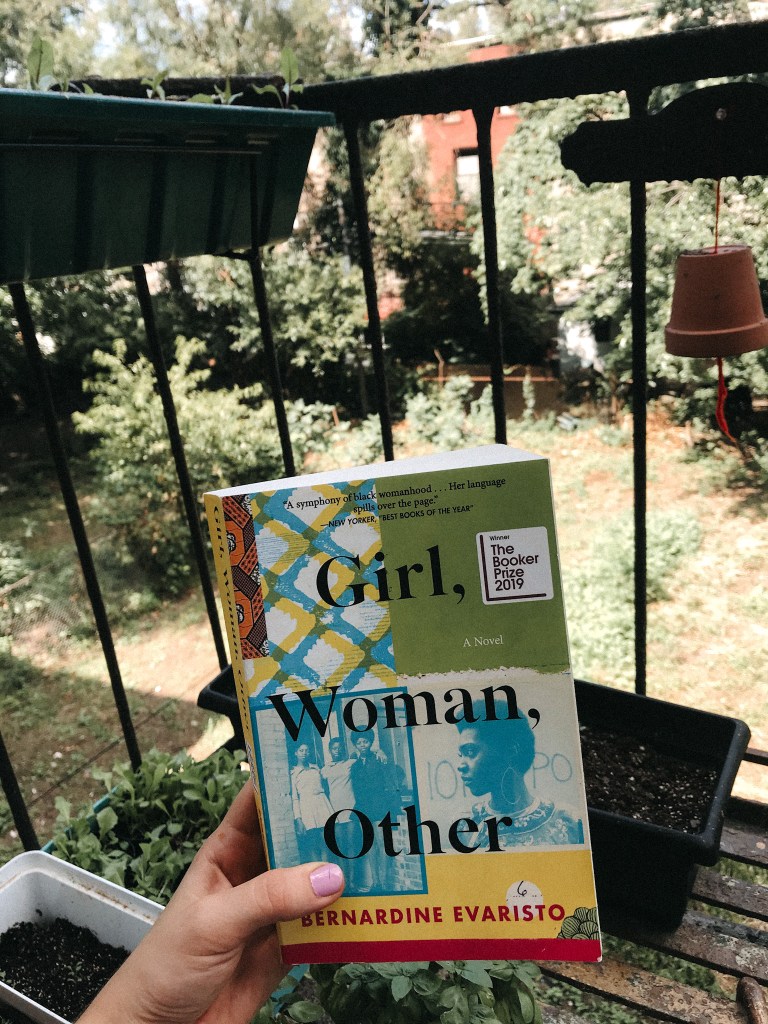
Girl, Woman, Other tells the story of 12 different characters lives as they experience the world. I loved the style of this book, the way the words flowed and how they were placed on the page. It is such an engaging novel and I purposely bought this book instead of borrowed it because I knew I would want to be underlining.
For me it was not the type of book that I could pick up and read when I had 5 minutes to spare. I had to really have time to sit with this book. I had to give myself time to get back into the story and the characters and all the little details of how they were connected. I found myself second guessing myself a lot, which I think is a testament to how powerful this book is. I constantly had to go back to previous characters chapters and reread because I was so curious to see how I felt about them 5 minutes ago compared to how I felt about them now reading about them from another characters perspective.
The book was also filled with fascinating commentary on the political and racial discourse going on in England (no doubt echoing things that are thought, believed and discussed in many other parts of the world). One scene in particular that struck me is when Roland, an often pretentious professor whose own daughter doesn’t even want to talk to him at this event, makes such important points about what it means to be called ‘elite’, and the dynamics at play in modern day Britain. This part touches on the intersections of race and class, something that comes up a lot in this book.
“as for the scorn currently poured on the so-called ‘metropolitan elite’, he’s worked bloody hard to reach the pinnacle of his profession, and it’s infuriating that the term is now bandied around by a proliferation of politicians and right-wing demagogues as one of society’s evils, who ridiculously accuse 48% of British voters who voted to stay in the EU of being just that
while the Brexiteers are preposterously described as ordinary and hardworking, as if everbody else isn’t
Roland was very wiling to defendhimself in an EU debate on BBC with a Brexit campaigner who accussed him of being ‘a metropolitan elite tosser’
to which Roland riposted that his family didn’t last six months n the great English countryside when they first arrived from the Gambia before they were hounded out of the village by the rabid racists of the sixties
in other words, he said to his accuser, there’s a reason why black people (Roland usually avoids the descriptor, ‘black’ in public as much as possible-so crude) ended up in the metropoles. it’s because you didn’t want us anywhere near you verdant fields and rosy cheeked damsels
nor is he ashamed to be elite, Roland added, why should he, Professor Roland Quartey, the state-educated son of African working-class immigrants, be denied the right to rise up the ranks? ” 412
I will say that I don’t know how I feel about the end of this book, both the last chapter and the epilogue. Each character was just so distinct and fascinating, and something about the ending felt off. I don’t want to spoil anything so if you’ve read the book DM me @sarahs_shelf_ and we can chat. But I read this for my Book Club and we talked about how it just almost didn’t even feel like the same writer as the rest of the book. Certain things that were once really complex and interesting felt like they were made to be too simplistic and idealistic in the final sentences.
Overall I really enjoyed this book. I love an amazingly written book about lives, just people literally living their lives. Generations of people observing the world around them. Intergenerational discussions about sexuality and feminism and racism. Moving stories and witty writing. I am here for it.

 Sarah's Shelf
Leave a comment